Preparation 1
Separate soil, rock, concrete and pavers
Removal of plant debris from landscape refreshes, with non-plant materials identified and separated before pickup.
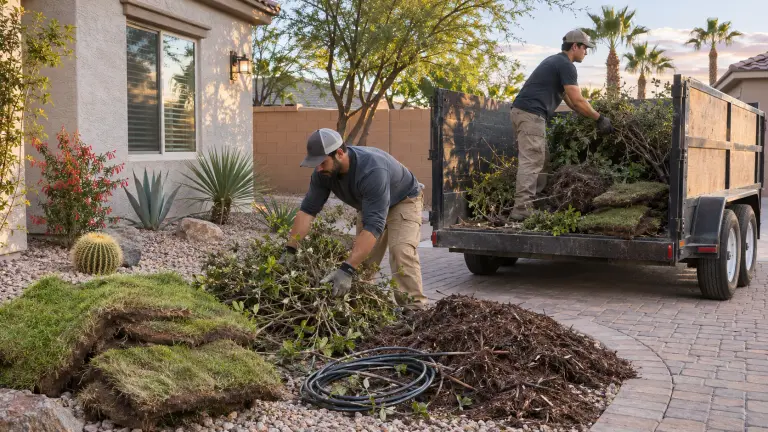
A landscape refresh can produce shrubs, sod, mulch, irrigation pieces and hardscape material in one area. Separate plant debris from soil, rock, pavers and chemicals so each part is assessed correctly.
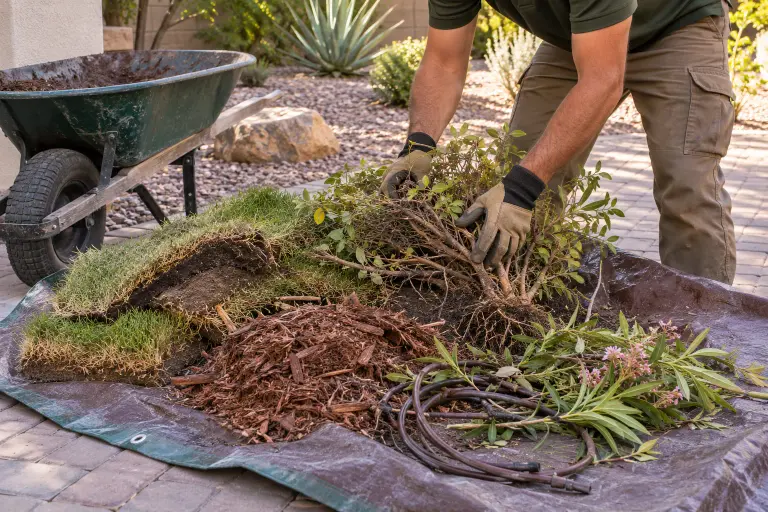
Separate soil, rock, concrete and pavers
Cap or mark exposed irrigation lines
Keep fertilizers, pesticides and liquids out of the pile
The guide answers the planning question behind this service page.
They should be shown separately. Wet sod and soil are much denser than branches, and mulch may need containment.
They are not ordinary yard debris. Identify hardscape, rock, soil and concrete separately before an estimate is prepared.
Small removed pieces can be reviewed when separated from plant material. Live irrigation work, buried lines and repairs are outside this debris-removal scope.
Pickup and haul-away planning for mixed outdoor piles of branches, leaves, brush, palm fronds and ordinary plant trimmings.
→Branch & Limb RemovalRemoval planning for downed or already-cut branches and limbs, with attention to length, weight, thorns and the carry route.
→Brush RemovalHaul-away for cut brush and shrub piles, including dense, thorny or tangled plant material already cleared from the yard.
→Tree Debris RemovalRemoval planning for trunk rounds, leafy limbs and tree debris already on the ground after pruning or approved tree work.
→Storm Debris RemovalPost-wind cleanup for branches, palm fronds and scattered plant debris after utility and structural hazards are cleared.
→Grass Clipping RemovalPickup planning for contained grass clippings and lawn trimmings from residential maintenance or seasonal cleanup.
→Call with the debris type, pile size, access path and service address.