Separate landscaping debris into plant material, dense natural material, hardscape and equipment. That one step makes photos clearer and prevents a light brush pile from hiding wet sod, rocks or irrigation parts.
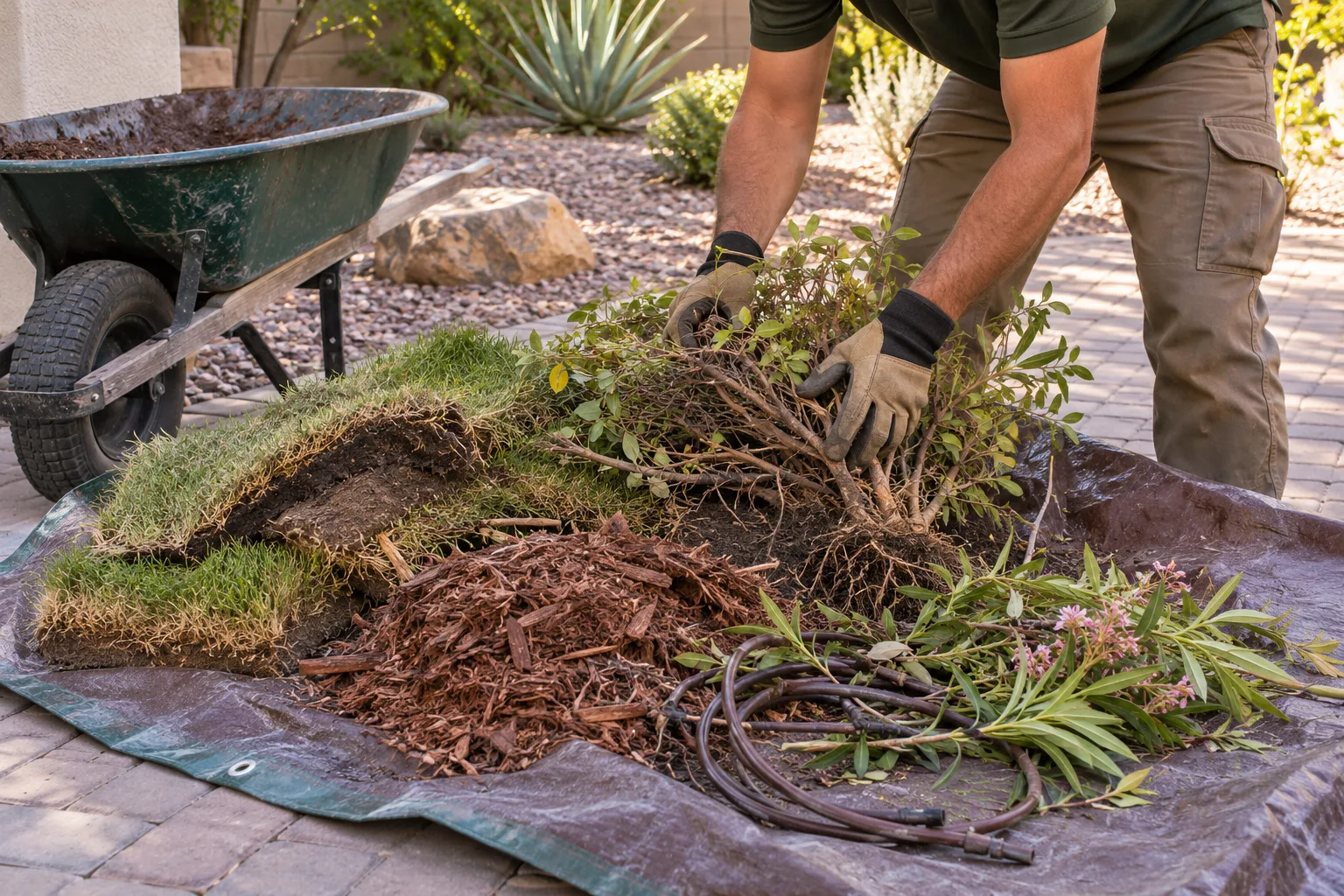
Use four simple groups
| Group | Examples | Why separate it |
|---|---|---|
| Plant debris | Branches, shrubs, leaves, trimmings | Loose volume and thorns affect handling |
| Dense natural material | Sod, wet mulch, soil, rock | Weight changes quickly with moisture and depth |
| Hardscape | Pavers, edging, concrete pieces | It is not ordinary yard debris |
| Equipment and chemicals | Irrigation parts, fertilizer, pesticides | Live systems, liquids and chemicals need separate review |
Keep chemicals and liquids out
Do not hide fertilizer, pesticide containers, fuel or other liquids in plant material. Leave labels readable and discuss the items separately with the appropriate disposal provider. Never pour a liquid onto soil or clippings to empty a container.
Show moisture and containment
Fresh sod and wet mulch can be far denser than dry brush. Photograph a cut edge so depth is visible, and show whether material is on a tarp, in a bin or loose on finished pavers. Keep drainage paths and irrigation controls accessible.
Finish with access photos
Photograph each turn between the debris and loading point. Note delicate pavers, pool equipment, gates and steep gravel. A useful estimate explains what must stay undamaged as well as what must leave.
Review the landscaping debris removal scope before combining material groups.